IPS vs TN Panel Gaming Monitors: Which is Better for Gaming?
IPS (In-Plane Switching)
Pros
- ✓Superior color accuracy and vibrancy with 95-100% DCI-P3 coverage
- ✓Wide 178/178 viewing angles for consistent image quality from any position
- ✓Better for HDR content with improved brightness and contrast
- ✓Ideal for immersive gaming experiences and single-player titles
- ✓Excellent for shared viewing and local co-op gaming
Cons
- ✗Generally slower response times compared to TN panels
- ✗Can suffer from black level crushing, reducing detail in dark scenes
- ✗Typically more expensive than TN alternatives
- ✗May exhibit IPS glow in dark environments
- ✗Higher power consumption
TN (Twisted Nematic)
Pros
- ✓Fastest response times, often 1ms or less for minimal motion blur
- ✓Highest refresh rates, up to 360Hz or more
- ✓Most affordable option for high-performance gaming
- ✓Excellent black level accuracy and detail in dark scenes
- ✓Lower power consumption
Cons
- ✗Narrow viewing angles (often 170/160 degrees) with color shifting
- ✗Limited color gamut, typically covering only 100% sRGB
- ✗Generally less vibrant and accurate colors compared to IPS
- ✗Can exhibit color inversion at extreme angles
- ✗Less suitable for HDR content
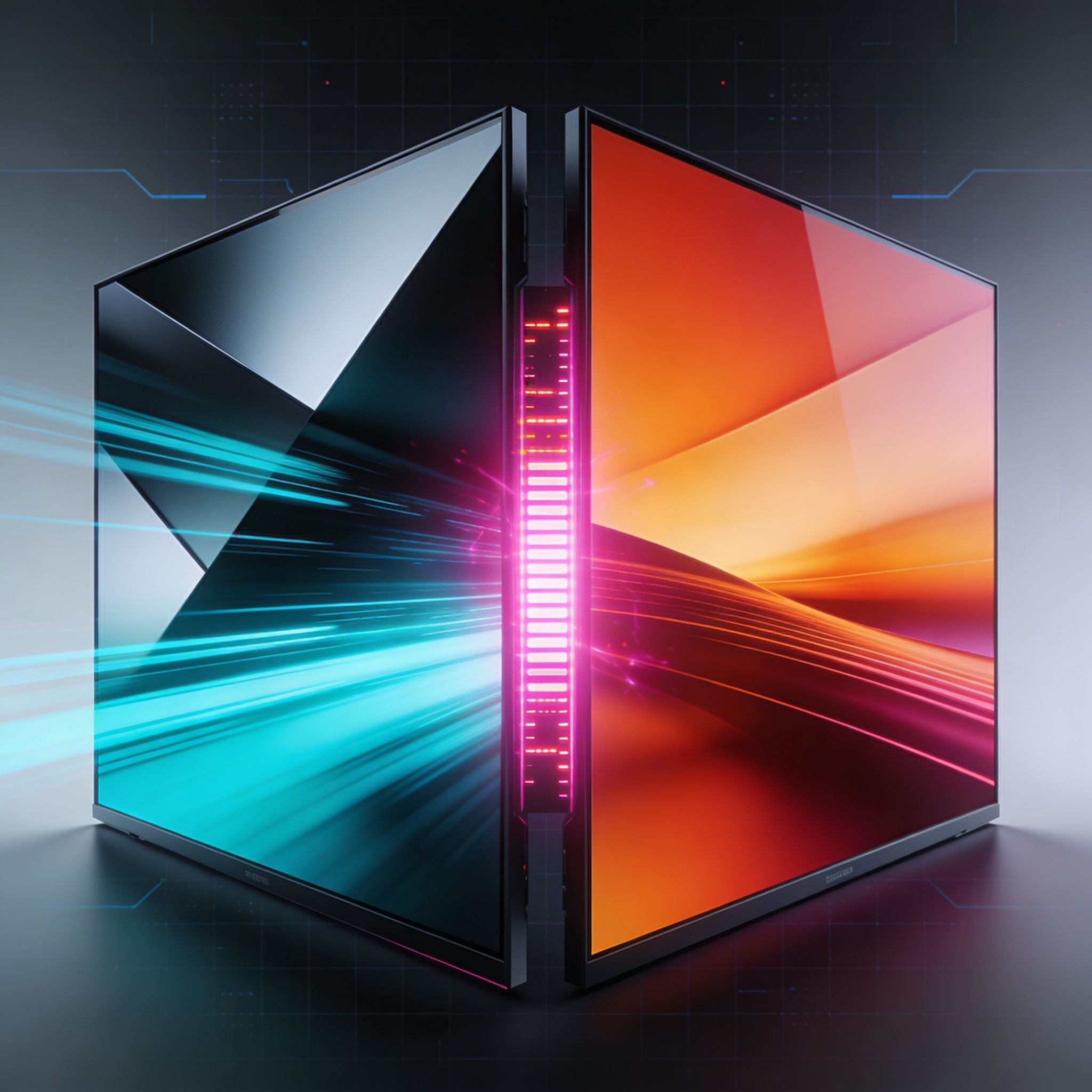
When it comes to gaming monitors, the debate between IPS and TN panels has been ongoing for years. Both technologies have their strengths and weaknesses, and the right choice ultimately depends on your specific gaming needs and preferences.
IPS (In-Plane Switching) panels have gained significant popularity in recent years due to their superior color accuracy and wide viewing angles. These panels can display 95-100% of the DCI-P3 color gamut, which is the standard used in digital cinema. This means that IPS monitors can produce more vibrant and lifelike colors compared to TN panels, which typically cover only 100% of the sRGB color space.
One of the most significant advantages of IPS technology is its wide viewing angles. With 178/178 degree viewing angles, IPS monitors maintain consistent color and brightness even when viewed from extreme positions. This makes them ideal for shared gaming experiences or for those who frequently adjust their viewing position.
However, IPS panels traditionally had slower response times compared to TN technology. While this gap has narrowed significantly in recent years, with some high-end IPS monitors now offering 1ms response times, TN panels still generally have a slight edge in this department. This can be crucial for competitive gamers who need every millisecond advantage.
On the other hand, TN (Twisted Nematic) panels have been the go-to choice for competitive gamers for many years. Their primary advantage lies in their speed. TN panels can achieve response times as low as 0.5ms and support refresh rates up to 360Hz or even higher. This combination of speed and responsiveness makes TN monitors ideal for fast-paced games where reaction time is critical.
Another advantage of TN panels is their superior black level performance. They can display deeper blacks and more detail in dark scenes compared to IPS panels, which sometimes suffer from black level crushing. This can be particularly beneficial in games with a lot of dark environments or nighttime scenes.
However, TN panels have some significant drawbacks. Their narrow viewing angles mean that color and brightness can shift dramatically when viewed from off-center positions. This makes them less suitable for shared viewing experiences or for gamers who frequently change their seating position.
Color accuracy is another area where TN panels fall short. While they can produce decent colors for gaming, they can't match the vibrancy and accuracy of IPS panels. This might not be a significant issue for many gamers, but for those who also use their monitor for content creation or media consumption, it could be a deciding factor.
In terms of HDR (High Dynamic Range) performance, IPS panels generally have the upper hand. Their ability to produce brighter highlights and more accurate colors makes them better suited for HDR content. TN panels, while improving, still struggle with HDR due to their limited color gamut and contrast ratios.
Price is another factor to consider. TN monitors are generally more affordable than their IPS counterparts, especially when comparing models with similar specifications. This makes them an attractive option for budget-conscious gamers who prioritize performance over image quality.
It's worth noting that there's a third panel type, VA (Vertical Alignment), which offers a middle ground between IPS and TN. VA panels provide better contrast ratios than both IPS and TN, and their response times and refresh rates have improved significantly in recent years. However, they can suffer from ghosting in fast-paced games, which might be a deal-breaker for competitive gamers.
In recent years, we've also seen the emergence of OLED gaming monitors. These offer the best of both worlds with infinite contrast ratios, perfect blacks, and extremely fast response times. However, they come with a hefty price tag and potential issues with burn-in, which might be a concern for some users.
When choosing between IPS and TN panels, it's essential to consider your specific gaming needs. If you're a competitive gamer who plays fast-paced shooters or fighting games and needs every possible advantage in terms of response time and refresh rate, a TN panel might be the way to go. The marginal gains in speed could make a real difference in your gameplay.
On the other hand, if you're more interested in immersive single-player experiences, enjoy visually stunning games, or often play with friends in the same room, an IPS panel would likely serve you better. The superior color accuracy and wide viewing angles can significantly enhance your gaming experience, especially in games where visual fidelity is a key part of the experience.
It's also worth considering that many modern games don't necessarily require the absolute fastest response times. Unless you're competing at a professional level, the difference between a 1ms TN panel and a 4ms IPS panel might not be noticeable in most gaming scenarios.
In conclusion, both IPS and TN panels have their place in the gaming world. TN panels remain the choice for competitive gamers who prioritize speed above all else, while IPS panels offer a more balanced experience with superior image quality. As technology continues to advance, the gap between these panel types is narrowing, making the choice even more nuanced. Ultimately, the best panel for you will depend on your specific gaming needs, budget, and personal preferences.
Feature Comparison
| Feature | IPS (In-Plane Switching) | TN (Twisted Nematic) |
|---|---|---|
| Response Time | 4-5ms typical | 1ms or less |
| Refresh Rate | Up to 240Hz | Up to 360Hz+ |
| Color Accuracy | Excellent, 95-100% DCI-P3 | Good, 100% sRGB |
| Viewing Angles | 178/178 degrees | 170/160 degrees |
| Price Range | $200-$800+ | $150-$500+ |
| Best For | Immersive gaming, single-player, shared viewing | Competitive gaming, esports |
| HDR Performance | Good to excellent | Limited |
| Power Consumption | Higher | Lower |
Verdict
After careful consideration of the strengths and weaknesses of both IPS and TN panels, the choice ultimately comes down to your specific gaming needs and priorities.
For competitive gamers and esports enthusiasts who play fast-paced shooters or fighting games, a TN panel monitor remains the best choice. The combination of lightning-fast response times (often 1ms or less) and high refresh rates (up to 360Hz or more) can provide a crucial edge in competitive play. The superior black level performance of TN panels also ensures that you won't miss any details in dark scenes, which can be critical in many games.
However, for the majority of gamers, an IPS panel offers a more well-rounded experience. The superior color accuracy, wider viewing angles, and better HDR performance make IPS monitors ideal for immersive gaming experiences. They're particularly well-suited for single-player games, RPGs, and any title where visual fidelity plays a significant role in the overall experience.
If you frequently game with friends in the same room or often adjust your viewing position, the wide viewing angles of IPS panels become even more valuable. You'll get consistent image quality no matter where you're sitting.
It's also worth considering that the price gap between high-end TN and IPS monitors has narrowed in recent years. While TN panels still generally offer better value for pure performance, you can now get excellent IPS monitors with fast response times and high refresh rates without breaking the bank.
For those who fall somewhere in between – perhaps playing a mix of competitive and immersive games – a high-quality IPS monitor might be the best compromise. Many modern IPS panels offer response times fast enough for most gaming scenarios, while providing a superior visual experience for all types of content.
In the end, both technologies have their place in gaming. TN panels continue to dominate the ultra-competitive esports scene, while IPS panels are increasingly popular among mainstream gamers and content creators. As panel technology continues to evolve, we may see these distinctions blur even further in the future.
Whichever you choose, ensure that your monitor choice aligns with your gaming habits, the types of games you play most often, and your overall computing needs. Remember, the best monitor is the one that enhances your gaming experience in the ways that matter most to you.
Last updated: March 12, 2026