Optical vs Mechanical Gaming Keyboards: Which Switch Technology Wins?
Optical Keyboards
Pros
- ✓Faster actuation speed (0.2ms vs 5-10ms for mechanical)
- ✓Longer lifespan (100M+ keystrokes vs 50-70M for mechanical)
- ✓No debounce delay, eliminating double-click issues
- ✓Consistent performance over time due to light-based actuation
- ✓Quieter operation, ideal for shared spaces
Cons
- ✗Limited customization options compared to mechanical switches
- ✗Generally more expensive than mechanical keyboards
- ✗Most models don't support hot-swapping switches
- ✗Fewer tactile feedback options for typing enthusiasts
- ✗Less established market with fewer premium options
Mechanical Keyboards
Pros
- ✓Extensive customization with dozens of switch types
- ✓Superior tactile feedback and audible click options
- ✓Hot-swappable models available for switch experimentation
- ✓Established market with premium options from multiple brands
- ✓Better resale value due to enthusiast community
Cons
- ✗Slower actuation speed compared to optical switches
- ✗Potential for debounce issues and double-clicking over time
- ✗Louder operation, which may disturb others
- ✗More maintenance required due to physical contact wear
- ✗Heavier weight makes them less portable
Optical vs Mechanical Gaming Keyboards: Which Switch Technology Wins?
When it comes to gaming keyboards, the debate between optical and mechanical switches has become increasingly relevant as optical technology has matured. Both technologies offer distinct advantages for gamers, but understanding their core differences is crucial for making the right investment.
How They Work: The Core Technology Difference
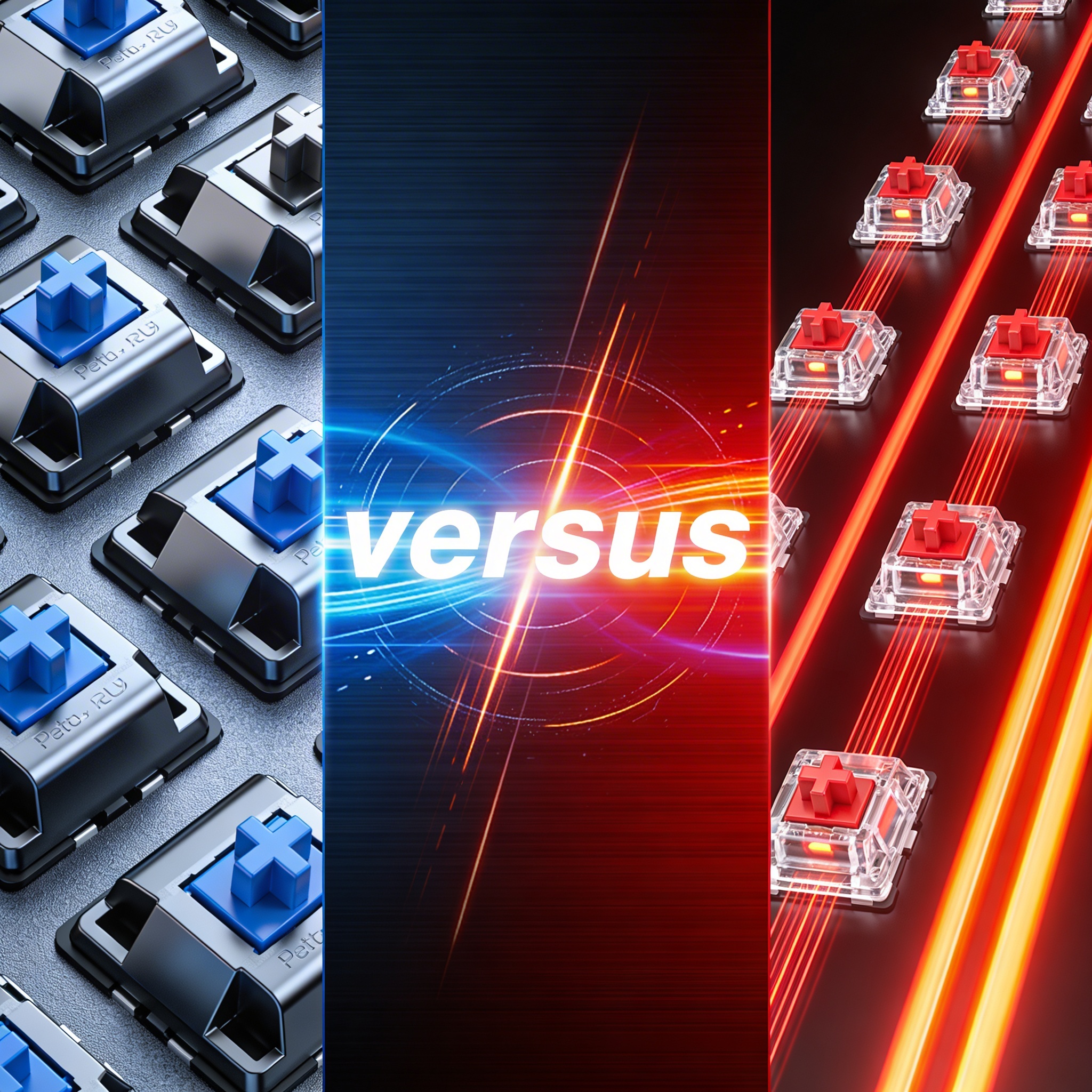
Optical keyboards use infrared light beams to detect key presses. When you press a key, it breaks an infrared beam, instantly registering the keystroke. This light-based actuation eliminates physical contact, resulting in faster response times and greater durability.
Mechanical keyboards rely on physical switches with metal contacts. When you press a key, two metal pieces connect to complete a circuit, registering the keystroke. This traditional approach provides tactile feedback and audible clicks that many typists and gamers have come to love.
Speed and Performance: The Critical Gaming Factor
For competitive gaming, speed is often the deciding factor. Optical switches typically offer actuation speeds around 0.2ms, while mechanical switches range from 5-10ms. This difference might seem negligible, but in high-stakes competitive scenarios, every millisecond counts.
Professional gamers who play fast-paced titles like first-person shooters, MOBAs, or fighting games often report noticing the difference in optical keyboards. The instant response can provide a competitive edge in situations where split-second reactions determine victory or defeat.
However, mechanical keyboards offer something optical switches can't replicate: precise tactile feedback. Many gamers prefer the physical confirmation of a keypress, allowing them to develop muscle memory and typing rhythm that enhances their overall gaming performance.
Durability and Longevity: Long-Term Investment
One of optical keyboards' strongest selling points is their exceptional durability. Without physical contacts to wear down, optical switches can withstand 100 million keystrokes or more. Mechanical switches, while still durable at 50-70 million keystrokes, will eventually experience contact degradation.
This translates to real-world benefits: optical keyboards maintain consistent performance throughout their lifespan, while mechanical keyboards might develop issues like key chatter or inconsistent actuation over time. For gamers who use their keyboards heavily, this reliability can be a significant advantage.
Customization and Personalization
Mechanical keyboards dominate in customization options. With dozens of switch types available - from linear Red switches to tactile Brown switches to clicky Blue switches - gamers can fine-tune their keyboard to match their exact preferences. Many premium mechanical keyboards also offer hot-swappable switches, allowing users to change switches without soldering.
Optical keyboards, while improving, still lag in customization. Most optical models come with fixed switch options, limiting personalization. However, this standardization can be beneficial for gamers who want consistent performance without the complexity of switch selection.
Price Considerations and Value
The price gap between optical and mechanical keyboards has narrowed significantly. Entry-level mechanical keyboards start around $80, while quality optical options begin at $120. Premium models of both types can exceed $300.
For budget-conscious gamers, mechanical keyboards offer more options at lower price points. However, when considering long-term value, optical keyboards' superior durability might justify their higher initial cost, especially for heavy users.
Gaming Genre Considerations
Different gaming genres benefit from different switch characteristics:
FPS and Racing Games: Optical switches excel here due to their speed advantage. Games like Counter-Strike, Valorant, or racing simulators benefit from instant response times.
MOBA and Strategy Games: Mechanical switches often shine in these genres where precise, deliberate keypresses matter more than raw speed. The tactile feedback helps with complex command combinations.
MMORPGs and RPGs: Both technologies work well here, with personal preference playing a larger role. The extensive keybinding in these games makes customization more important than switch type.
The Verdict: Which Should You Choose?
The choice between optical and mechanical gaming keyboards ultimately depends on your specific needs and priorities.
Choose optical if you prioritize:
- Maximum speed and response time
- Long-term reliability and consistency
- Quieter operation for shared spaces
- Minimal maintenance requirements
Choose mechanical if you prioritize:
- Extensive customization options
- Superior tactile feedback
- Hot-swappable switch capabilities
- Established enthusiast community and support
For competitive gamers focused on speed-dependent genres, optical keyboards offer a tangible performance advantage. The instant actuation and consistent performance can provide the edge needed in high-level competition.
For gamers who value customization, tactile feedback, and the traditional mechanical keyboard experience, mechanical switches remain the superior choice. The ability to fine-tune your keyboard to your exact preferences often outweighs the speed advantage of optical switches.
The Future of Gaming Keyboards
As optical technology continues to mature, we're seeing hybrid approaches emerge. Some manufacturers now offer keyboards with both optical and mechanical options, allowing users to choose based on their preferences. This trend suggests that both technologies will continue to coexist, each serving different segments of the gaming community.
The best approach might be to try both technologies if possible. Many gaming stores offer demo units, and some retailers have generous return policies. Your personal preference, hand size, typing style, and the specific games you play should all factor into your decision.
Ultimately, both optical and mechanical gaming keyboards can provide excellent gaming experiences. The technology has advanced to the point where neither option is a poor choice - it's about finding the right fit for your gaming style and preferences.
Feature Comparison
| Feature | Optical Keyboards | Mechanical Keyboards |
|---|---|---|
| Actuation Speed | 0.2ms (light-based) | 5-10ms (physical contact) |
| Lifespan | 100M+ keystrokes | 50-70M keystrokes |
| Customization | Limited switch options | Dozens of switch types |
| Price Range | $120-$250 | $80-$300 |
| Noise Level | Quiet to moderate | Moderate to loud |
| Hot-Swappability | Rarely available | Common in premium models |
| Gaming Performance | Faster reaction times | Better tactile precision |
| Maintenance | Minimal | Regular cleaning required |
Verdict
Final Verdict: Optical vs Mechanical Gaming Keyboards
After extensive analysis of both technologies, the verdict is clear: neither optical nor mechanical keyboards are universally superior - they simply serve different needs better.
For competitive gamers in speed-dependent genres like FPS or racing games, optical keyboards have a clear edge. The 0.2ms actuation speed and consistent performance over time provide measurable advantages in high-stakes situations. If you're competing at a professional level or aspire to do so, the speed benefit of optical switches is worth the investment.
However, for the vast majority of gamers, mechanical keyboards remain the better overall choice. The superior customization options, excellent tactile feedback, and established ecosystem make them more versatile for different gaming genres and typing tasks. The ability to hot-swap switches and choose from dozens of switch types means you can optimize your keyboard for your exact preferences.
Our recommendation: If you're primarily focused on competitive gaming in speed-dependent genres and value maximum performance, choose an optical keyboard. If you want versatility, customization, and the best overall typing experience, mechanical keyboards are the way to go.
The good news is that both technologies have matured to the point where you can't really go wrong with either choice. The differences are now more about personal preference than objective superiority. Consider your specific gaming needs, try both if possible, and choose the technology that feels right for you.
Last updated: March 12, 2026