Gaming PC vs Console for Esports: Which Platform Wins?
Gaming PC
Pros
- ✓Superior performance potential with higher frame rates and better graphics settings
- ✓Mouse and keyboard precision gives competitive edge in FPS and RTS games
- ✓Upgradeable components allow performance improvements over time
- ✓Mod support and customization options extend game longevity
- ✓Multi-purpose functionality for work, content creation, and streaming
Cons
- ✗Higher upfront cost, especially for high-end setups
- ✗Requires technical knowledge for building, maintenance, and troubleshooting
- ✗More complex setup with drivers, updates, and compatibility issues
- ✗Games often require frequent updates and patches
- ✗Can be intimidating for casual gamers or those unfamiliar with PC hardware
Gaming Console
Pros
- ✓Lower upfront cost and simpler plug-and-play experience
- ✓Consistent performance optimized for specific hardware
- ✓Exclusive titles that drive platform loyalty
- ✓Better couch gaming experience with controller support
- ✓No need for technical knowledge or troubleshooting
Cons
- ✗Limited upgrade options - stuck with hardware for 5-7 years
- ✗Lower performance ceiling compared to high-end PCs
- ✗Online multiplayer often requires paid subscription
- ✗Limited mod support and customization options
- ✗Backward compatibility varies by platform and generation
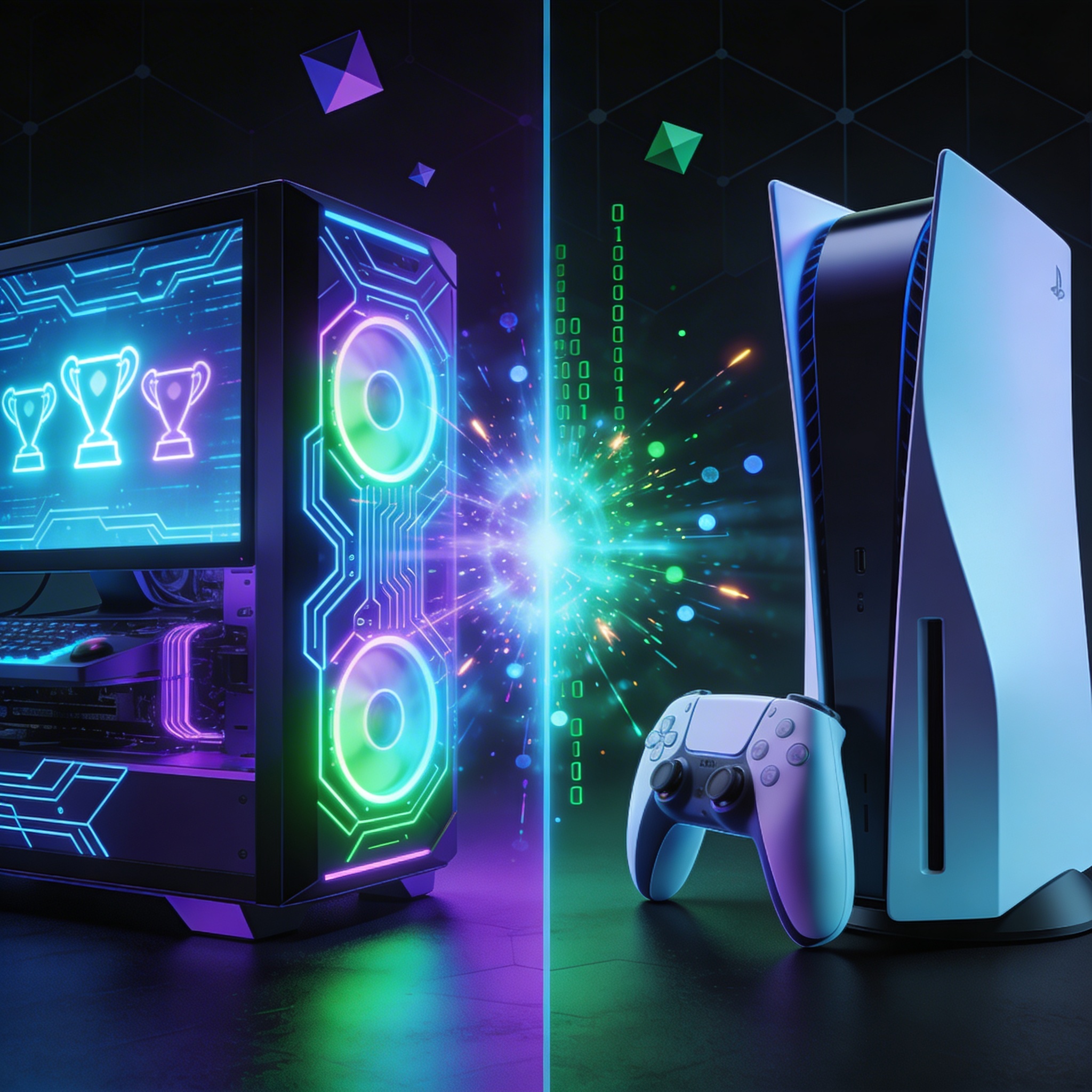
Gaming PC vs Console for Esports: Which Platform Wins?
The eternal debate between gaming PCs and consoles has intensified in the esports era, where competitive advantage can mean the difference between victory and defeat. Both platforms offer unique benefits for competitive gaming, but they serve different types of players and competitive goals.
Performance and Competitive Edge
When it comes to esports, performance is king. Gaming PCs can deliver frame rates of 240 FPS or even 360 FPS in competitive titles like Counter-Strike 2, Valorant, and Fortnite. This high frame rate advantage translates to smoother gameplay and more responsive controls - critical factors in split-second competitive scenarios.
Consoles have made significant strides, with the latest generation supporting up to 120 FPS in many titles. However, they still can't match the performance ceiling of high-end gaming PCs. The difference becomes particularly noticeable in fast-paced shooters where every millisecond counts.
Input methods also play a crucial role. Gaming PCs offer the precision of mouse and keyboard, which remains the gold standard for FPS games, MOBAs, and RTS titles. While console controllers have improved dramatically, they still can't match the accuracy and customization options available with PC peripherals.
Cost Considerations
Initial investment is where consoles traditionally shine. A new gaming console costs $400-$600 and includes everything needed to start playing immediately. Gaming PCs, especially those capable of competitive esports performance, typically start around $800 and can easily exceed $2000 for high-end setups.
However, the total cost of ownership tells a different story. Gaming PCs don't require monthly subscriptions for online play, while consoles like PlayStation and Xbox charge $60-$70 annually for online services. PC game prices are often lower, with frequent sales on platforms like Steam offering 50-75% discounts. Over several years, these savings can offset the higher initial PC investment.
Game Library and Exclusives
Gaming PCs offer the most extensive library, including all console exclusives that eventually make their way to PC, plus PC-exclusive titles and indie games. The PC platform also supports emulation, giving access to retro gaming libraries that consoles can't match.
Consoles maintain strong exclusive titles that drive platform loyalty - think of franchises like God of War, Halo, or Mario. These exclusives can be compelling reasons to choose a particular platform, especially for casual gamers who prioritize specific game experiences over competitive advantages.
The Esports Ecosystem
The competitive gaming landscape heavily favors PCs. Most professional esports tournaments are played on PC, from League of Legends and Dota 2 to Counter-Strike and Valorant. The infrastructure, training resources, and competitive scene are predominantly PC-focused.
Streaming and content creation also lean toward PC. Professional gamers and streamers overwhelmingly use PCs because of the superior control over capture, overlays, and production quality. If you're aspiring to go pro or build a streaming career, PC is practically mandatory.
Comfort and Convenience
Consoles excel in living room comfort. They're designed for couch gaming with controllers, big-screen TVs, and simple interfaces. This setup is perfect for casual gaming sessions and local multiplayer with friends.
PCs can achieve similar comfort levels but require more intentional setup. Gaming chairs, desk arrangements, and monitor choices all factor into the experience. However, once properly configured, PC gaming can be equally comfortable while offering superior performance.
Upgrade Paths and Longevity
Gaming PCs offer flexibility through component upgrades. You can replace your graphics card, add more RAM, or upgrade your processor as technology advances. This means your system can remain competitive for years with strategic upgrades rather than complete replacements.
Consoles follow a fixed lifecycle, typically lasting 5-7 years per generation. When new consoles release, older models become obsolete for new game releases. This means buying an entirely new system rather than upgrading individual components.
The Verdict for Different Players
Choose a Gaming PC if:
- You're serious about competitive esports and want every performance advantage
- You enjoy tinkering with hardware and optimizing settings
- You want the flexibility to upgrade over time
- You're interested in streaming or content creation
- You want access to the broadest game library
- You need a computer for work/school anyway
Choose a Console if:
- You want the simplest, most affordable entry into gaming
- You prefer couch gaming with friends and family
- You're primarily interested in exclusive console titles
- You don't want to deal with technical maintenance
- You're a casual gamer who plays a few favorite titles
- You want a dedicated gaming device without multi-purpose complexity
The Hybrid Approach
Many serious gamers eventually adopt a hybrid approach - using a high-end PC for competitive gaming and a console for exclusive titles and casual play. This strategy provides the best of both worlds but requires the highest investment.
Looking Ahead
The gap between PC and console gaming continues to narrow in some areas while widening in others. Cloud gaming services and game streaming are beginning to blur platform lines, potentially making hardware choices less critical in the future.
For now, though, the choice between gaming PC and console for esports comes down to your priorities: maximum competitive performance and flexibility with PC, or simplicity and affordability with consoles. Understanding these trade-offs will help you make the right choice for your gaming journey.
Feature Comparison
| Feature | Gaming PC | Gaming Console |
|---|---|---|
| Cost of Entry | Higher ($800-$2000+) | Lower ($400-$600) |
| Frame Rates | 240+ FPS possible | 60-120 FPS typical |
| Input Options | Keyboard/mouse, controller, specialized peripherals | Controller only |
| Game Library | Vast - includes PC exclusives and all console ports | Limited to platform exclusives and ports |
| Upgrade Potential | Fully upgradeable components | None - buy new console for upgrades |
| Competitive Advantage | Higher precision and customization | Limited by hardware constraints |
| Ease of Use | Moderate - requires technical knowledge | High - plug and play |
| Mod Support | Extensive modding community | Limited or no mod support |
Verdict
Final Verdict: Gaming PC Dominates Esports, But Context Matters
For competitive esports, gaming PCs hold a decisive advantage. The superior frame rates, input precision, upgradeability, and ecosystem support make PCs the clear choice for anyone serious about competitive gaming. If your goal is to climb ranks, compete in tournaments, or stream professionally, a gaming PC isn't just better - it's essentially required.
However, the "best" platform ultimately depends on your specific situation and goals. Consoles remain the superior choice for casual gamers who value simplicity, affordability, and exclusive titles. They're also ideal for those who prefer the living room gaming experience or want a dedicated device without technical complexity.
Consider your budget honestly - if you can only afford one platform, think about how you actually game. Do you play a few favorite titles casually, or are you grinding competitive ranks? Your answer should guide your choice.
The most successful esports athletes overwhelmingly choose PCs because the performance advantages are real and measurable. But for the average gamer, a console might provide more enjoyment if it means actually playing games rather than troubleshooting hardware issues.
My recommendation: If esports performance matters to you and you can afford the investment, choose a gaming PC. If you're more casual or budget-conscious, a console will serve you well. And if you're somewhere in between, consider starting with a mid-range PC that can handle competitive games while leaving room for future upgrades.
Last updated: March 12, 2026