PUBG vs Fortnite: Which Battle Royale Reigns Supreme?
PUBG
Pros
- ✓Realistic, tactical gameplay with authentic gun mechanics
- ✓Destructible environments and vehicle traversal
- ✓Squad-based communication essential for teamwork
- ✓Mature, gritty atmosphere with detailed weapon models
- ✓Excellent spatial audio for competitive advantage
Cons
- ✗Steeper learning curve for new players
- ✗Slower-paced gameplay may feel less exciting
- ✗Smaller player base than Fortnite
- ✗Less frequent content updates and events
- ✗Higher system requirements for optimal performance
Fortnite
Pros
- ✓Fast-paced, arcade-style action for casual players
- ✓Unique building mechanics create dynamic combat
- ✓Constant updates with new seasons, skins, and events
- ✓Cross-platform play across all devices
- ✓Creative mode for custom maps and mini-games
Cons
- ✗Building mechanics can be overwhelming for newcomers
- ✗Less realistic gunplay compared to tactical shooters
- ✗Cartoony graphics may not appeal to all players
- ✗Microtransactions heavily emphasized
- ✗Younger player demographic may create toxic environments
PUBG vs Fortnite: Which Battle Royale Reigns Supreme?
The battle royale genre exploded in popularity thanks to the PUBG vs Fortnite rivalry that defined gaming in the late 2010s. These two titans took different approaches to the same core concept, creating distinct experiences that continue to attract millions of players worldwide.
The battle royale genre exploded in popularity thanks to the PUBG vs Fortnite rivalry that defined gaming in the late 2010s. These two titans took different approaches to the same core concept, creating distinct experiences that continue to attract millions of players worldwide.
The Origins of Battle Royale
PlayerUnknown's Battlegrounds (PUBG) launched in March 2017 as a realistic military shooter that dropped 100 players onto massive maps with one goal: be the last person standing. The game's gritty realism, authentic weapon mechanics, and tactical gameplay immediately resonated with shooter fans looking for a more grounded experience.
Fortnite Battle Royale followed in September 2017, developed by Epic Games as a free-to-play alternative. While it borrowed the battle royale concept, Fortnite introduced building mechanics that transformed the genre. Players could gather materials and construct walls, ramps, and towers in real-time, creating dynamic combat scenarios impossible in PUBG.
Player Base and Popularity
The numbers tell a clear story about which game dominates the market. Fortnite boasts over 650 million registered players and 110 million monthly active users as of 2025. PUBG, while still popular, maintains around 305,100 average PC players according to Steam Charts, though its mobile version reaches approximately 49.8 million active players.
Revenue follows a similar pattern. Fortnite has generated over $40 billion since launch, primarily through skins, battle passes, and in-game events. PUBG trails at roughly $17 billion, with most revenue coming from its mobile version due to its larger player base in that market.
Gameplay Mechanics: Realism vs Arcade
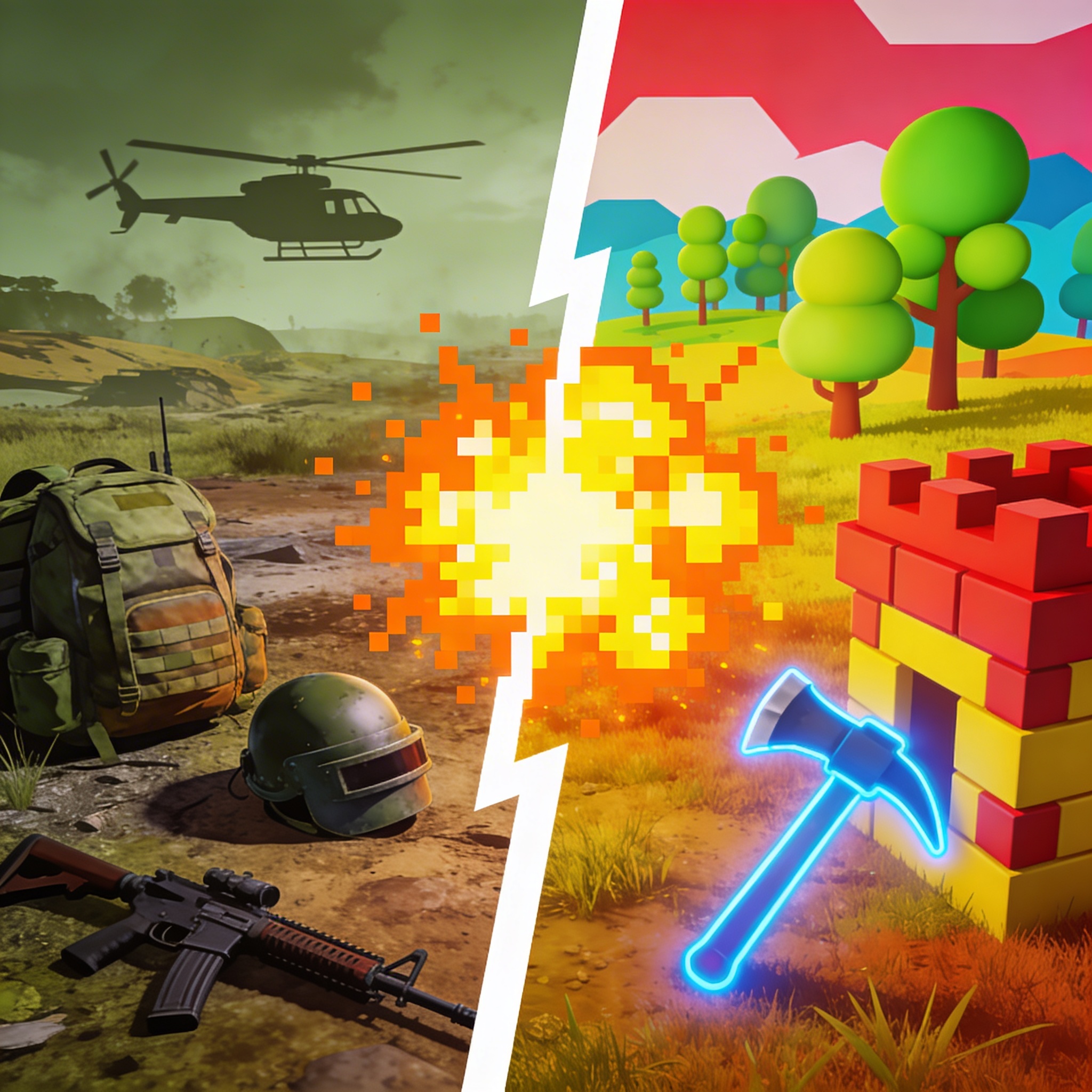
PUBG embraces realistic military shooter fundamentals. Weapons have authentic recoil patterns, bullet drop, and damage modeling. A single headshot can eliminate an opponent, while body shots require multiple hits depending on armor and weapon type. The health system is unforgiving - you can't heal instantly, forcing players to find cover and manage their recovery carefully.
The game encourages tactical thinking through its realistic physics and ballistics. Vehicle traversal adds another layer of strategy, allowing players to cross large maps quickly but making them vulnerable to ambushes. Communication becomes essential in squad play, where coordinating movements and sharing resources often determines victory.
Fortnite takes the opposite approach. Gunfights feel more like arcade shooters, with faster movement, quicker healing, and more forgiving hit detection. The building mechanic fundamentally changes combat - skilled players can construct defensive structures mid-fight, creating vertical gameplay that PUBG lacks entirely.
This building system adds a significant skill ceiling. Top players can edit structures rapidly, creating windows to shoot through or floors to fall through for surprise attacks. However, this same mechanic can be frustrating for newcomers who get eliminated by opponents with superior building skills.
Visual and Audio Design
PUBG prioritizes realism with detailed environments, authentic weapon models, and a muted color palette dominated by browns, grays, and greens. The graphics create an immersive military atmosphere that enhances the tactical gameplay. Weather effects like rain and fog add tactical considerations, reducing visibility and sound propagation.
Audio design in PUBG is exceptional. Spatial audio allows players to pinpoint enemy locations through footsteps, gunshots, and vehicle sounds. The game includes an HRTF (Head-Related Transfer Function) option that enhances directional audio, giving players a competitive advantage when using headphones.
Fortnite embraces a cartoonish art style with vibrant colors and exaggerated animations. The visual design makes the game more accessible and less intimidating, especially for younger players. Regular updates transform the map with new locations, seasonal themes, and crossover events featuring popular franchises.
Sound design in Fortnite is competent but less critical than in PUBG. The game includes a "Visualize Sound Effects" feature that displays visual indicators for nearby sounds, making it more accessible to hearing-impaired players and reducing the advantage of superior audio equipment.
Maps and World Design
PUBG offers multiple maps ranging from 2x2 to 8x8 kilometers, each with distinct characteristics. Erangel, the original map, features military bases, small towns, and open fields perfect for long-range engagements. Sanhok provides dense jungle environments for close-quarters combat. Miramar offers desert landscapes with limited cover, emphasizing strategic positioning.
Each map supports different playstyles, from aggressive rushing to slow, methodical approaches. The variety prevents gameplay from becoming stale and allows players to find maps that suit their preferences.
Fortnite uses a single evolving island that changes with each season. The developer regularly updates the map, adding new locations, removing old ones, and transforming the environment based on the current season's theme. This approach keeps the game feeling fresh without requiring players to learn multiple maps.
The island includes diverse biomes - urban areas, forests, mountains, and beaches - providing varied combat scenarios. Dynamic events like meteor showers or volcanic eruptions can dramatically alter the battlefield during matches.
Game Modes and Features
PUBG offers several game modes including classic battle royale, ranked matches, arcade modes with modified rules, and custom matches. The mobile version includes a "World of Wonder" creative mode for additional variety.
Fortnite's game modes are more diverse. Beyond battle royale, it includes creative mode for building custom maps and games, zero-build mode for players who prefer combat without construction, and limited-time modes that introduce unique rules and mechanics.
The creative mode has become particularly popular, allowing players to design custom games, race tracks, or social spaces. This feature extends the game's lifespan and provides content creators with tools to build communities.
Monetization and Business Models
Both games use free-to-play models with cosmetic monetization, but their approaches differ significantly. Fortnite emphasizes skins, emotes, and battle passes, with new items released weekly through the item shop. The game frequently collaborates with brands, movies, and other games to create limited-edition cosmetics.
PUBG's monetization is more restrained, focusing primarily on battle passes and a smaller selection of cosmetics. The game doesn't emphasize microtransactions as heavily, though it still offers weapon skins and character outfits.
Esports and Competitive Scene
Fortnite's esports scene includes massive prize pools, with the 2019 World Cup offering $30 million in total prizes. The game's popularity and accessibility make it attractive for competitive play, though building mechanics can create a high skill ceiling that's difficult to balance.
PUBG's competitive scene focuses on tactical team play, with the 2025 prize pool reaching $34 million. The game's realistic mechanics translate well to competitive settings, emphasizing strategy and communication over mechanical skill.
Cross-Platform Play
Fortnite supports cross-platform play across all devices - PC, consoles, and mobile. Players can squad up with friends regardless of their platform, and the game includes cross-progression so progress carries across devices.
PUBG's cross-platform support is more limited. While the mobile version allows cross-play between iOS and Android, PC and console versions typically don't mix due to balance concerns. This limitation can frustrate players who want to play with friends on different platforms.
System Requirements and Accessibility
PUBG demands more from hardware due to its realistic graphics and larger maps. Players need capable systems to achieve smooth frame rates, especially in intense firefights with multiple players nearby.
Fortnite is more accessible, running on a wider range of hardware including older PCs and mobile devices. The cartoonish graphics are less demanding than PUBG's realistic rendering, making the game available to more players regardless of their hardware budget.
Community and Player Demographics
PUBG attracts an older, more hardcore audience interested in realistic military shooters. The community tends to be more serious about tactics and communication, though toxicity can still be an issue.
Fortnite's player base skews younger, with many players under 18. The game's colorful presentation and frequent updates appeal to casual gamers and content creators. However, the younger demographic can sometimes lead to less mature interactions in voice chat.
The Verdict: Which Should You Play?
Choosing between PUBG and Fortnite ultimately depends on your gaming preferences and what you want from a battle royale experience.
Play PUBG if you:
- Prefer realistic, tactical gameplay with authentic weapon mechanics
- Enjoy slower-paced, methodical combat that rewards strategy
- Want a more mature gaming environment
- Have a capable gaming PC or console
- Value communication and teamwork in squad play
- Appreciate detailed graphics and immersive sound design
Play Fortnite if you:
- Want fast-paced, arcade-style action
- Enjoy creative building mechanics that add strategic depth
- Prefer frequent content updates and seasonal events
- Want to play with friends across different platforms
- Have limited hardware or prefer gaming on mobile
- Enjoy colorful, cartoony graphics over realistic visuals
- Want access to creative mode and custom games
Both games excel in their respective approaches to battle royale. PUBG offers the most authentic tactical shooter experience available in the genre, while Fortnite provides unmatched accessibility and creative freedom.
For players new to battle royale, Fortnite's lower barrier to entry and free-to-play model make it the better starting point. The building mechanics, while challenging, add a unique dimension that keeps matches exciting and unpredictable.
For shooter veterans or players who prefer realistic combat, PUBG delivers a more satisfying experience. The tactical depth, realistic ballistics, and emphasis on positioning create tense, rewarding gameplay that feels earned when you secure a victory.
The truth is, many battle royale fans enjoy both games for different reasons. PUBG satisfies the craving for realistic combat, while Fortnite provides quick, entertaining matches with friends. Rather than choosing one over the other, consider playing both to experience the full spectrum of what battle royale games can offer.
Feature Comparison
| Feature | PUBG | Fortnite |
|---|---|---|
| Player Count | 305,100 PC players | 650M+ registered players |
| Revenue | $17 billion total | $40 billion total |
| Gameplay Style | Realistic, tactical | Arcade, building-focused |
| Maps | Multiple 2x2 to 8x8 km maps | Single evolving island |
| Graphics | Realistic, gritty | Cartoonish, vibrant |
| Sound Design | Superior spatial audio | 3D audio with visual cues |
| Game Modes | Battle Royale, Ranked, Arcade | Battle Royale, Creative, Zero Build |
| Monetization | Cosmetics, battle passes | Heavy emphasis on skins/V-Bucks |
Verdict
The Final Verdict: Two Champions, Different Paths
After extensive analysis of PUBG vs Fortnite, the clear conclusion is that both games are champions in their own right, but they serve different audiences. Fortnite has become the more popular and commercially successful game, with its massive player base, frequent updates, and cross-platform accessibility making it the face of battle royale for many gamers.
However, PUBG remains the superior choice for players seeking realistic tactical gameplay. Its authentic weapon mechanics, detailed environments, and emphasis on strategy create a more immersive and rewarding experience for dedicated shooter fans. The game's mature presentation and tactical depth continue to attract players who want more than just arcade action.
The battle royale genre is large enough for both games to coexist. Fortnite dominates the mainstream market with its accessibility and constant content updates, while PUBG maintains a dedicated following among players who value realism and tactical depth. Rather than declaring one definitively better, it's more accurate to say they excel at different aspects of the battle royale formula.
For newcomers to the genre, Fortnite offers the gentler learning curve and free-to-play model that makes experimentation easy. For experienced shooter fans or those who prefer realistic combat, PUBG provides the tactical depth and authentic mechanics that make victory feel truly earned.
The best recommendation? Try both games if possible. Many players find themselves enjoying PUBG for its realistic tactical gameplay while also appreciating Fortnite's creative building mechanics and fast-paced action. The battle royale genre is richer for having both these distinct experiences available to players.
Last updated: March 12, 2026