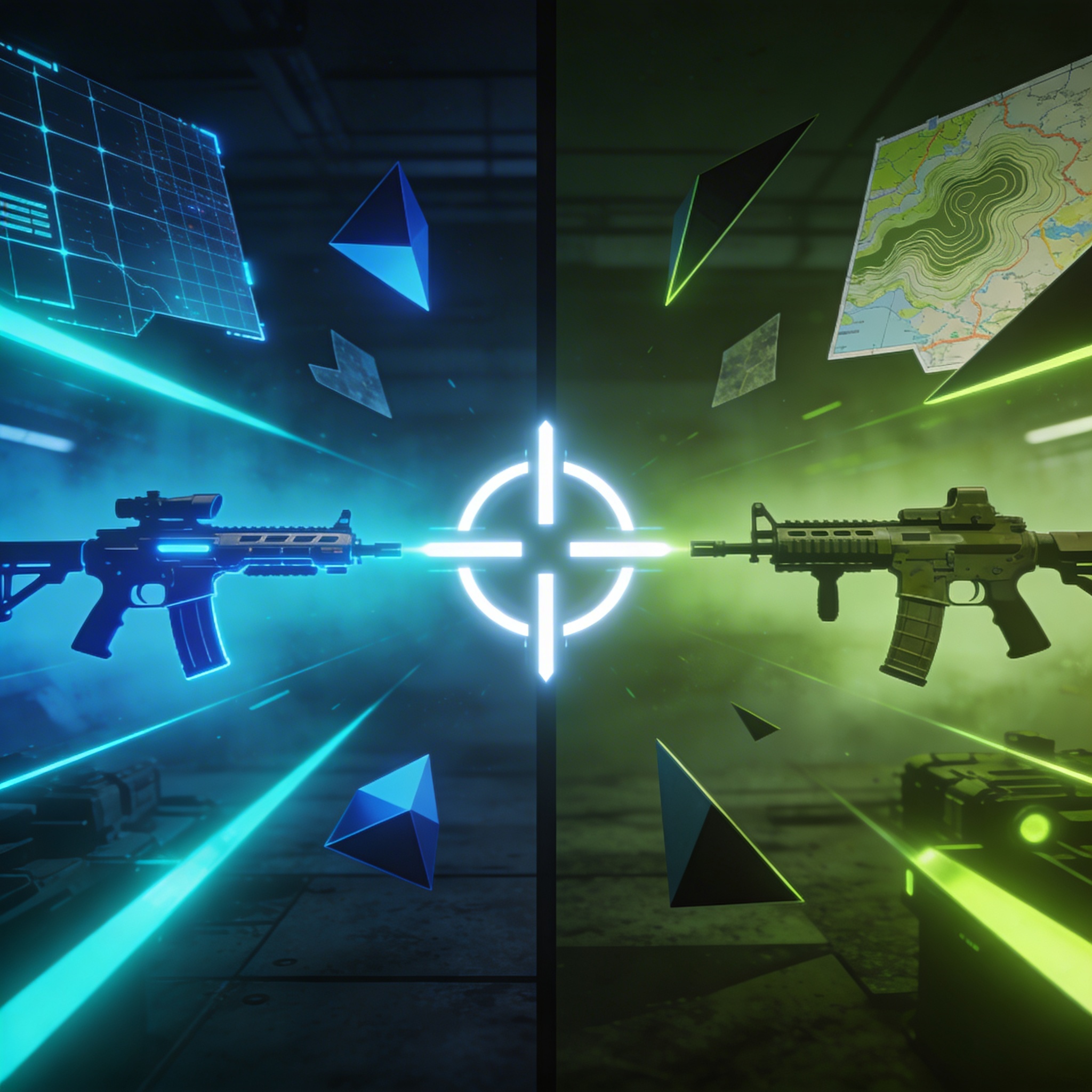
Valorant vs CS:GO: Which Tactical Shooter Reigns Supreme?
Valorant
Pros
- ✓Agent abilities add strategic depth and creative plays
- ✓More forgiving recoil patterns for new players
- ✓Better anti-cheat system (Vanguard)
- ✓Crosshair customization and training tools
- ✓More accessible to casual players
Cons
- ✗Abilities can create chaotic, less skill-based encounters
- ✗Lower skill ceiling for pure shooting mechanics
- ✗Frequent meta changes disrupt consistency
- ✗Agent abilities can be overwhelming for newcomers
- ✗Matches can feel more random due to ability interactions
CS:GO
Pros
- ✓Superior gunplay and recoil control mechanics
- ✓Higher skill ceiling for shooting precision
- ✓More consistent, predictable gameplay
- ✓Better movement mechanics (counter-strafing, bunny hopping)
- ✓Established competitive scene and legacy
Cons
- ✗Steep learning curve for recoil patterns
- ✗Less accessible to casual players
- ✗Cheating issues despite VAC
- ✗Limited utility options compared to Valorant
- ✗Older graphics and engine
Valorant vs CS:GO - The Ultimate Tactical Shooter Showdown
The debate between Valorant and CS:GO has raged on since Valorant's release in 2020, with players passionately defending their preferred tactical shooter. Both games share DNA but offer distinctly different experiences that cater to different playstyles and skill levels.
Core Gameplay Philosophy
CS:GO represents the pure tactical shooter experience. Its gameplay revolves around precise gunplay, strategic utility usage (limited to grenades, molotovs, and flashes), and impeccable team coordination. The game demands mastery of recoil patterns, movement mechanics, and map control. Every kill feels earned through superior aim and positioning.
Valorant builds upon CS:GO's foundation but introduces agent abilities that fundamentally change the tactical equation. These abilities—ranging from smokes and flashes to teleportation and vision-blocking walls—create dynamic, unpredictable encounters. The game emphasizes not just shooting skill but also ability usage timing and team composition.
Shooting Mechanics Comparison
The shooting experience differs dramatically between the two games. CS:GO features strict recoil patterns that require extensive practice to master. Each weapon has a unique spray pattern that players must learn and control through precise mouse movements. This creates a high skill ceiling where mechanical mastery directly correlates with success.
Valorant offers more forgiving recoil mechanics. While still requiring skill, the recoil patterns are generally more manageable, allowing players to focus more on ability usage and positioning. This makes Valorant more accessible to newcomers but potentially limits the mechanical skill expression that defines CS:GO's competitive scene.
Movement and Positioning
CS:GO's movement system is notoriously complex, featuring techniques like counter-strafing (stopping movement to shoot accurately), bunny hopping (chaining jumps for speed), and crouch peeking. These mechanics reward dedicated practice and create a significant skill gap between casual and professional players.
Valorant simplifies movement considerably. While still important, movement mechanics are less punishing, and the game's abilities often compensate for positional disadvantages. This makes the game more approachable but reduces the mechanical depth that many CS:GO players cherish.
Utility and Tactical Depth
This represents perhaps the most significant philosophical difference. CS:GO's utility is limited to five types of grenades and equipment, forcing teams to rely on superior positioning and timing. The game emphasizes pre-aim angles, crossfires, and coordinated executes.
Valorant's agent abilities expand tactical possibilities exponentially. Teams can create vision-denial walls, teleport across the map, or deploy automated turrets. This creates more dynamic gameplay but can also lead to situations where ability usage overshadows pure shooting skill.
Competitive Scene and Esports
CS:GO boasts a mature competitive ecosystem with decades of history. Major tournaments like the Majors attract massive viewership, and the game's mechanics have been refined through years of competitive play. The skill ceiling is demonstrably higher, with professional players achieving inhuman precision and consistency.
Valorant's competitive scene, while younger, has grown rapidly. The game's structure makes it more accessible for new competitive players, and Riot Games' investment in the esports ecosystem has created a thriving professional scene. However, the ability-based gameplay creates different competitive dynamics compared to CS:GO's pure mechanical focus.
Which Game is "Harder"?
This question dominated the Reddit discussions and reveals a fundamental misunderstanding of what "hard" means in gaming. CS:GO is harder in terms of pure mechanical skill—mastering recoil, movement, and precise aim requires thousands of hours of practice. The game rewards dedication to mechanical fundamentals.
Valorant is harder in terms of decision-making complexity. Players must constantly evaluate when to use abilities, how to counter enemy abilities, and how to position themselves around dynamic battlefield conditions. The game demands strong game sense and adaptability.
The Verdict: Different Games for Different Players
Rather than declaring one game superior, it's more accurate to recognize that Valorant and CS:GO serve different player needs. CS:GO appeals to players who want to master pure shooting mechanics and appreciate the satisfaction of mechanical perfection. The game rewards dedication and creates a clear skill progression path.
Valorant attracts players who enjoy strategic variety and creative problem-solving. The ability system creates more diverse gameplay scenarios and allows for comebacks through clever ability usage. The game is more forgiving mechanically but demands strong tactical awareness.
The Reddit user's experience reflects this reality—struggling to translate CS:GO skills to Valorant is common because the games reward different competencies. A global elite CS:GO player might find Valorant's ability interactions and different shooting mechanics challenging, while a Valorant player might struggle with CS:GO's strict recoil patterns.
Ultimately, both games represent the pinnacle of tactical shooters, just approached from different philosophical angles. The best choice depends on whether you value mechanical purity or strategic diversity in your competitive gaming experience.
Feature Comparison
| Feature | Valorant | CS:GO |
|---|---|---|
| Shooting Mechanics | Forgiving recoil patterns | Precise, skill-based recoil |
| Movement | Simpler, more straightforward | Complex (counter-strafing, bunny hopping) |
| Utility | Agent abilities add variety | Limited to grenades and flashes |
| Skill Ceiling | Moderate (abilities cap skill expression) | High (pure shooting skill matters most) |
| Learning Curve | More accessible to newcomers | Steep, requires significant practice |
| Game Pacing | Faster, more chaotic | Slower, more methodical |
| Anti-Cheat | Vanguard (more aggressive) | VAC (less effective) |
Verdict
Final Verdict: Two Champions, Different Crowns
The Valorant vs CS:GO debate isn't about which game is objectively better—it's about which game aligns with your personal playstyle and competitive goals. CS:GO remains the gold standard for pure tactical shooting, offering unmatched mechanical depth and a proven competitive ecosystem. Its steep learning curve is matched only by its satisfying skill progression.
Valorant carves its own niche by making tactical shooters more accessible while adding strategic layers through abilities. It's not "easier" than CS:GO—it's different, demanding strong game sense and adaptability rather than mechanical perfection.
For players transitioning between games, expect a significant adjustment period. CS:GO skills don't directly translate to Valorant, and vice versa. The games reward fundamentally different competencies, which explains why many players excel in one but struggle in the other.
Our recommendation? Try both games extensively before committing. CS:GO offers a more traditional competitive experience with higher mechanical demands, while Valorant provides more varied gameplay through its ability system. Neither is superior—they're simply different expressions of what makes tactical shooters compelling. The tactical shooter genre is big enough for both champions to reign simultaneously, each serving different segments of the competitive gaming community.
Last updated: March 12, 2026